Qing Dai
Postdoctoral Scholar, Radiological Sciences · UCLA

I’m a postdoctoral scholar in the Department of Radiological Sciences at the David Geffen School of Medicine, UCLA, working in the Magnetic Resonance Research Labs (MRRL) with Dr. Holden Wu and affiliated with the Jonsson Comprehensive Cancer Center. I earned my Ph.D. in Bioengineering from UCLA in 2026.
Previously, I earned an M.S. in Biomedical Imaging at UCSF (advised by Dr. Peder Larson) and a B.S. in Biochemistry with a Bioinformatics minor at UCLA.
PhD Research
I develop advanced imaging methods and integrate them into image-guided interventional systems — so clinicians can see clearly and act precisely, right where it matters most.
My core technical contributions span four areas:
- Imaging Acquisition & Reconstruction
- Real-Time Signal & Image Processing
- Machine Learning for Image-Guided Interventions
- Physics-Based Modeling & Imaging Validation
I bring these technologies into interventional systems through full-arc validation and integration: each method advances from phantom to ex vivo to in vivo across multiple imaging platforms and therapeutic modalities — microwave ablation, HIFU, biopsy, and surgical robotics — and is integrated with therapy devices and robotic platforms into working hardware/software workflows, from scanner to needle, with clinical, engineering, and industry partners. Two of these technologies are patent pending.
Updates
| Jun 02, 2026 | Our first-authored paper “Active Electromagnetic Interference Suppression for MR Thermometry During MR-Guided Microwave Ablation” was published in Magnetic Resonance in Medicine. Read more |
|---|---|
| May 12, 2026 | Received a Magna Cum Laude Merit Award at ISMRM 2026 (Cape Town) for our computational modeling abstract on pulsed microwave ablation. |
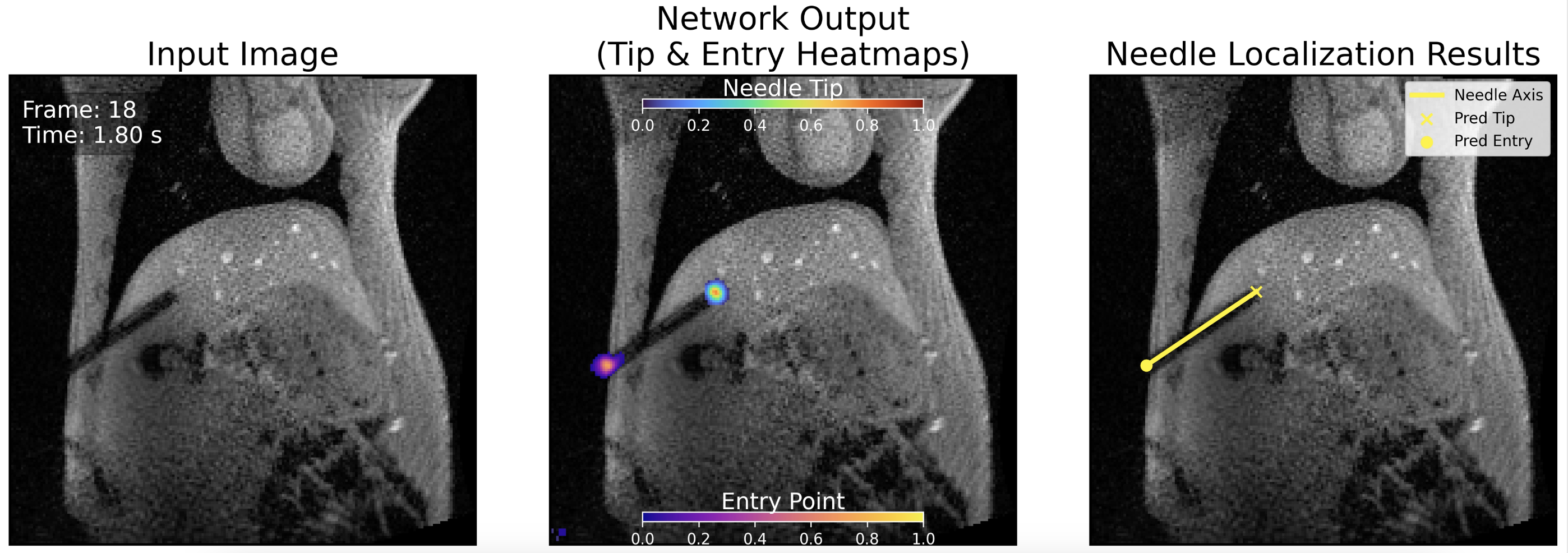
| Mar 30, 2026 | Our co-authored paper “Keypoint Detection Network for Needle Localization on Intra-Procedural MRI in MRI-Guided Liver Interventions” was published in IJCARS. Read more |
| Nov 17, 2025 | Our co-first-authored paper “Thermoresponsive Polymer-Modified SiO₂/Gadolinium-Diethylenetriamine Pentaacetic Acid Composite Nanoparticles for Magnetic Resonance Imaging-Guided Ultrasound-Modulated Contrast Enhancement at Human Body Temperatures” was published in ACS Applied Nano Materials. Read more |
| Sep 11, 2025 | Our first-authored paper “Volumetric Thermometry in Moving Tissues Using Stack-of-Radial MRI and an Image-Navigated Multi-Baseline Proton Resonance Frequency Shift Method” was published in Magnetic Resonance in Medicine. Read more |
Selected Publications
- iMRI
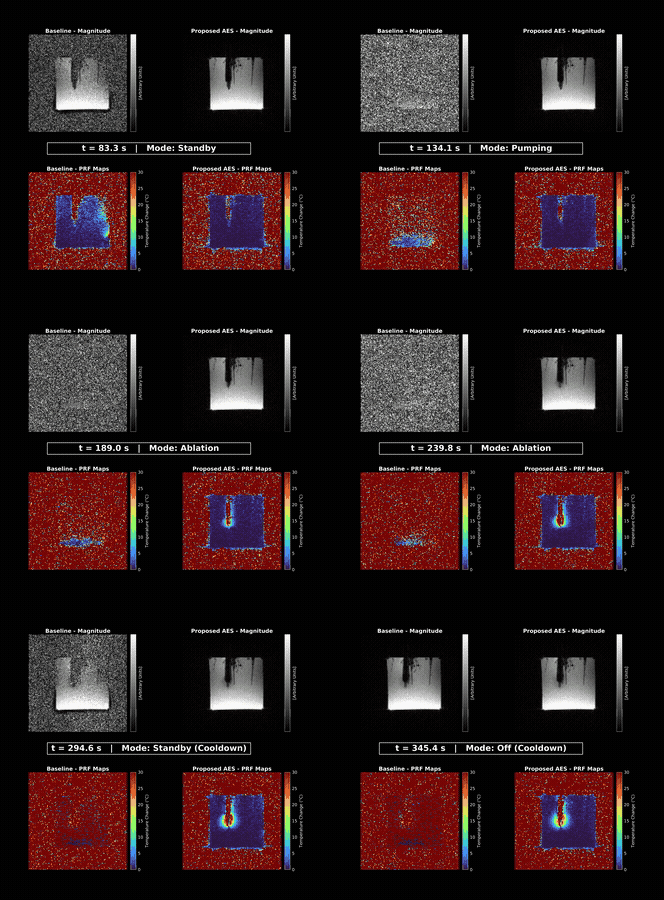 Active electromagnetic interference suppression for MR thermometry during MR-guided microwave ablationMagnetic Resonance in Medicine, 2026U.S. Patent Pending
 - iMRI
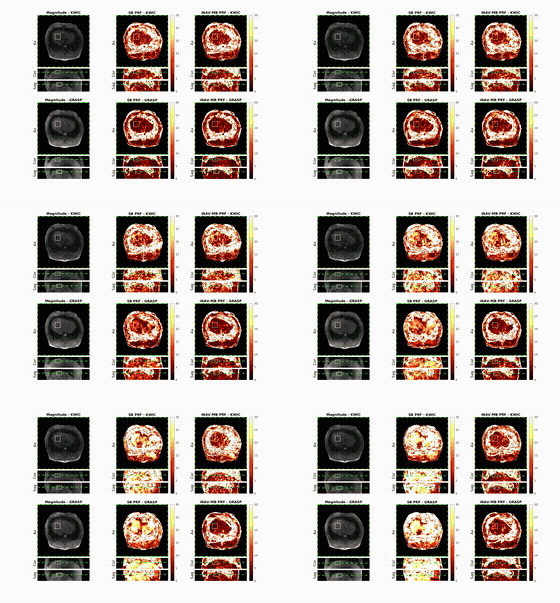 Volumetric thermometry in moving tissues using stack-of-radial MRI and an image-navigated multi-baseline proton resonance frequency shift methodMagnetic Resonance in Medicine, 2026